What the record says
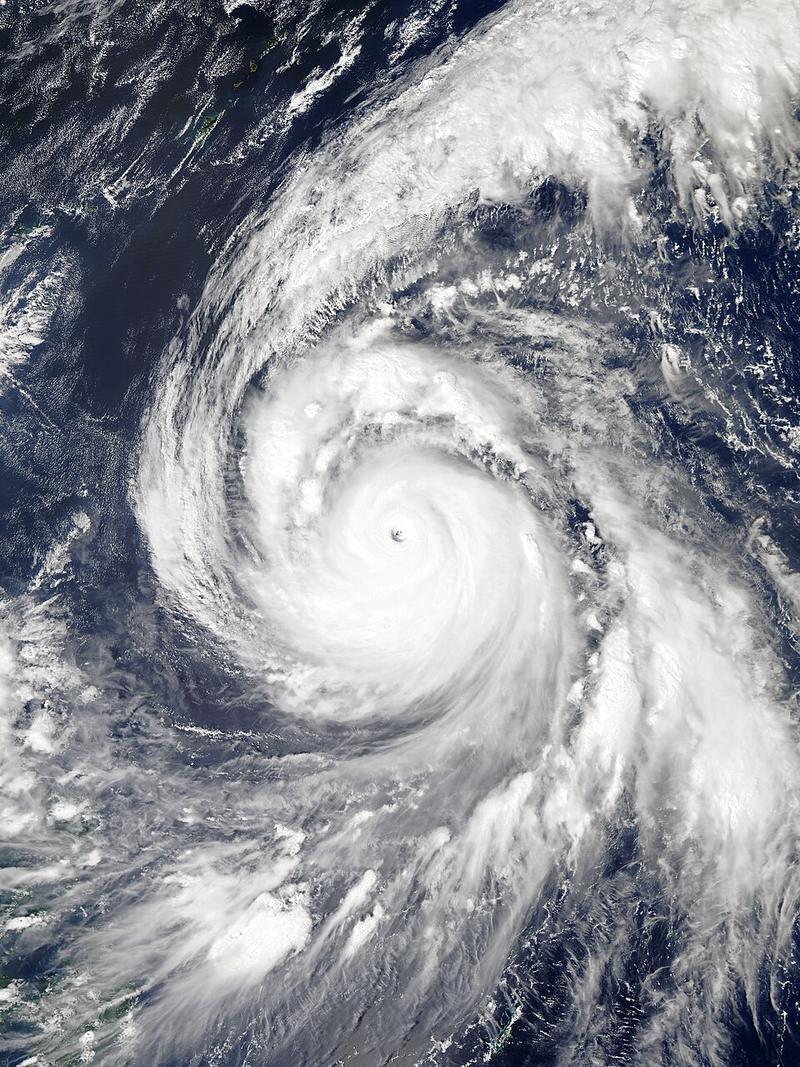

Kong-Rey was a typhoon in the Western North Pacific basin that lasted about 10 days, from 27 September 2018 to 7 October 2018. Its peak was Category 5 (150 kt) on 1 October 2018, with a 1-minute sustained wind of 150 kt (173 mph, 278 km/h). Its lowest recorded pressure was 900 hPa.
- Category 5peak intensity
- 150 ktpeak wind (173 mph)
- 900 hPalowest pressure
- 10 dayslifetime
Source of the peak wind: US Joint Typhoon Warning Center (western Pacific). The regional forecast centre (RSMC Tokyo (Japan Meteorological Agency)) gave a peak of 115 kt on its own averaging convention (10-minute winds), so the two figures differ.
It has its own page because it reached category 5 or stronger.
This page gives the official record's figures. It does not describe the human cost of the storm, which is far larger than any wind speed or pressure here.
Kong-Rey (2018) compared with other storms named Kong-Rey
Storm names are reused, so 3 storms with their own page here were called Kong-Rey. This one is in bold.
| Storm | Peak | Lowest pressure | Days | Came ashore |
|---|---|---|---|---|
| Kong-Rey (2007) | Category 3, 100 kt | 960 hPa | 7 | No landfall |
| Kong-Rey (2018) | Category 5, 150 kt | 900 hPa | 10 | South Korea |
| Kong-Rey (2024) | Category 5, 140 kt | 925 hPa | 9 | Taiwan and People's Republic of China |
Where it came ashore
- 6 October 2018: South Korea (South Gyeongsang), 60 kt, tropical storm, estimated
Estimated landfalls are where the track first meets land after time at sea, with the wind read between the positions either side, so the real wind may have been different. The list shows up to 8. How landfalls are found.
Countries it came within 50 km of
Strongest effect first.
How to read this track
The line joins the storm's six-hourly positions with straight lines, coloured by its intensity at each point, so it shows how the storm strengthened and weakened. The real path curved between the positions. A dashed grey stretch means the storm had become post-tropical. Records before the satellite era (about the 1960s) are estimates.
Source: NOAA NCEI IBTrACS, public domain. See data sources and caveats.
Other notable storms of the 2018 Western North Pacific season
- Maria (2018)Category 5
- Jebi (2018)Category 5
- Mangkhut (2018)Category 5
- Trami (2018)Category 5
- Yutu (2018)Category 5
- Jelawat (2018)Category 4
Other notable storms near Japan
- Nancy (1961)6 September 1961 to 20 September 1961, peak Category 5 (185 kt), 890 hPa
- Violet (1961)2 October 1961 to 11 October 1961, peak Category 5 (180 kt), 895 hPa
- Ida (1958)20 September 1958 to 29 September 1958, peak Category 5 (175 kt), 877 hPa
- Kit (1966)20 June 1966 to 3 July 1966, peak Category 5 (170 kt), 880 hPa
- Grace (1958)27 August 1958 to 9 September 1958, peak Category 5 (165 kt), 905 hPa